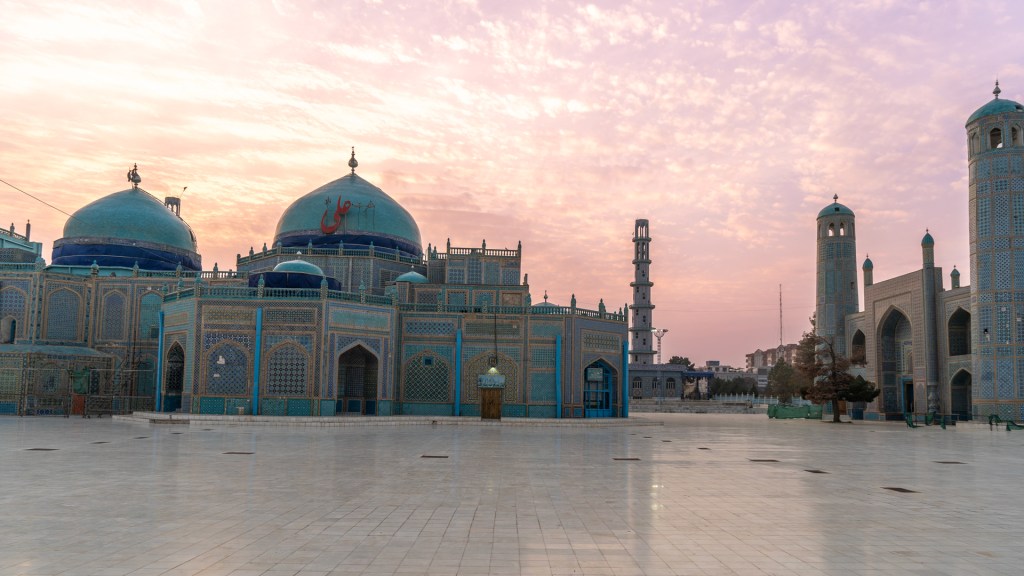
Nestled in the heart of northern Afghanistan, Mazar-e Sharif stands as a city rich in history and spiritual significance. Its name, meaning “The Noble Shrine,” reflects its deep connection to Islamic heritage, as it is believed to be the resting place of Ali, the fourth Caliph of Islam and the cousin and son-in-law of Prophet Muhammad (pbuh). This sacred site, located in the capital city of Balkh province, draws thousands of pilgrims and tourists each year, especially during the Persian New Year, Nawroz.
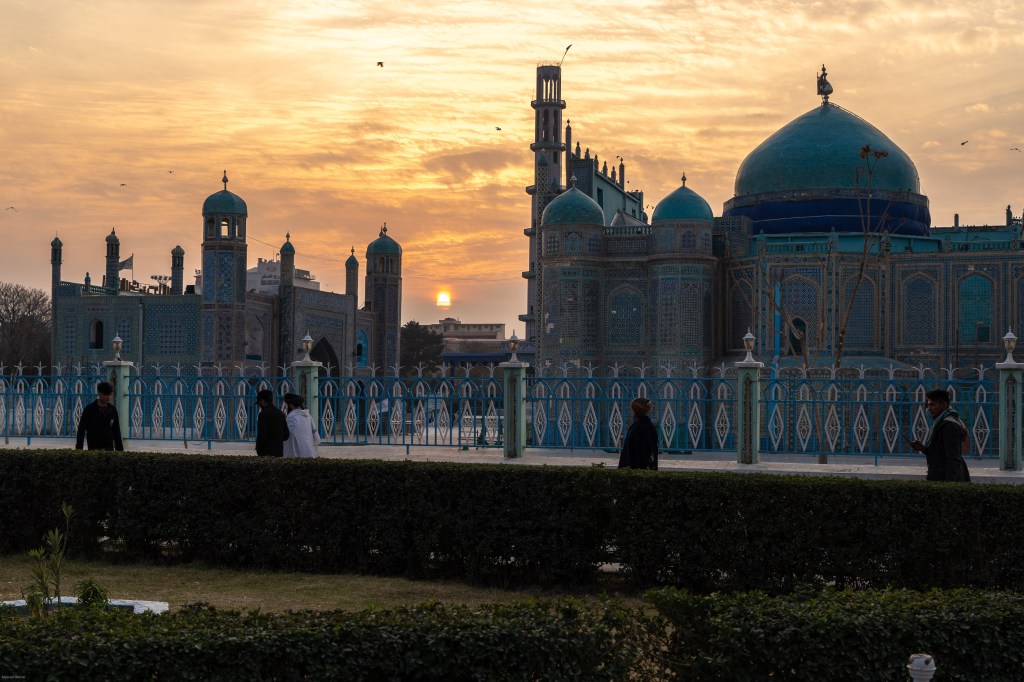
The story of Mazar-e Sharif begins in the 12th century when a spiritual man had a profound dream. In this vision, he saw that Imam Ali was buried at a specific location in what is now Mazar-e Sharif. The man shared his dream with the ruling Seljuk authorities, who, moved by the revelation, commissioned the construction of a shrine on the site in 1136 AD. The original shrine served as a beacon of faith and devotion for many years until it was tragically destroyed in 1220 AD by the Mongol conqueror Genghis Khan, who was in search of hidden treasures.
However, the legacy of the shrine did not end with its destruction. In 1481 AD, Sultan Hussain Baiqara, a Timurid king, resurrected the shrine after another spiritual leader experienced a similar dream confirming the location of Imam Ali’s tomb. Sultan Hussain appointed the renowned architect Maulana, along with other skilled craftsmen, to rebuild the shrine. The result was a stunning structure adorned with intricate tile work, embodying the artistic and architectural achievements of the time. Today, the shrine remains one of Afghanistan’s most revered religious sites, symbolizing both the spiritual and cultural resilience of the region.
Mazar-e Sharif’s significance extends beyond its religious importance; it is a cultural and historical gateway to the broader region, particularly to the ancient city of Balkh, just an hour’s drive away. Balkh, known in antiquity as Bactria, is one of the oldest cities in the world and a key region in the history of Central Asia. It has been a significant center in various empires, including the Achaemenid, Seleucid, and Greco-Bactrian empires.
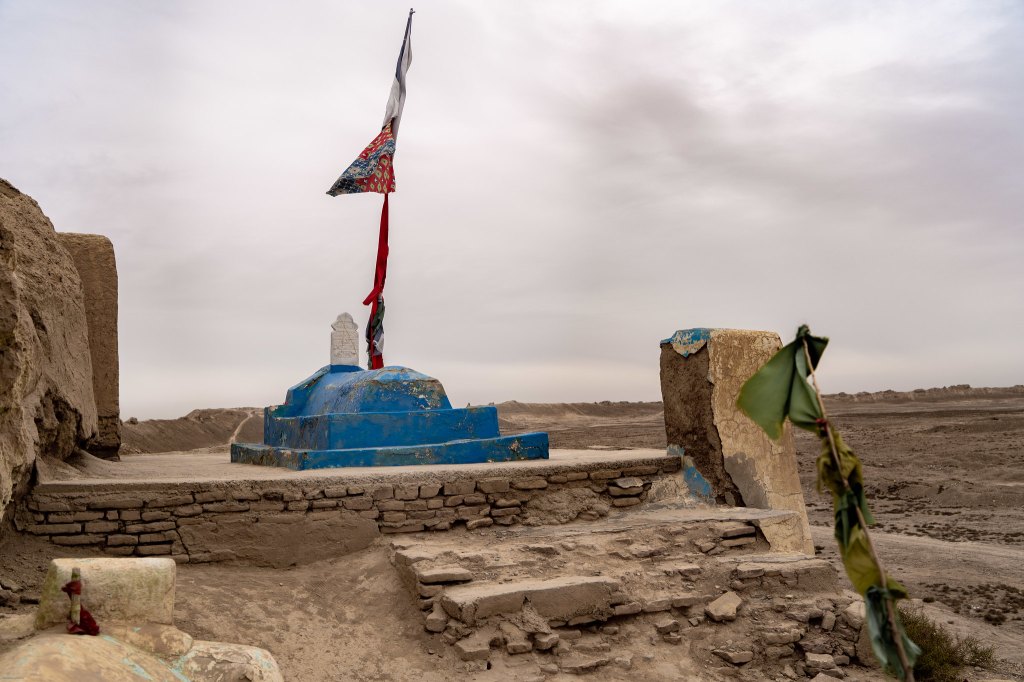
Historically, Mazar-e Sharif and its surrounding region have witnessed a succession of powerful rulers. From the 6th century BCE, the area was under the control of the Achaemenids, followed by Alexander the Great, whose conquests led to its inclusion in the Seleucid Empire. As the Seleucids declined, the Greco-Bactrian kingdom emerged, only to fall to the Sakas around 130 BCE. The Yuezhi then took over, leading to the establishment of the Kushan Empire. The region later came under the influence of the Sassanian Empire and was subsequently incorporated into the Islamic world following the conquests of 651 CE.
Throughout the medieval period, the region was part of Greater Khorasan and was ruled by various dynasties, including the Tahirids, Saffarids, Samanids, Ghaznavids, Ghurids, Ilkhanids, Timurids, and the Khanate of Bukhara. The poet Jalal al-Din Rumi was born in this area, adding to its cultural significance. During the 19th century, the city became part of the Durrani Empire, though it was often governed by autonomous Uzbek rulers. The city played a strategic role during the Soviet–Afghan War in the 1980s, serving as a base for Soviet forces and later becoming a battleground between various factions during Afghanistan’s civil wars.
In the late 20th century, Mazar-e Sharif witnessed significant violence, particularly during the Taliban’s attempts to take control of the city. The city changed hands multiple times, with notable massacres and retaliations occurring during the Taliban’s rise and fall. After the September 11 attacks in 2001, Mazar-e Sharif was the first Afghan city to fall to U.S.-backed forces, marking a turning point in the war against the Taliban.
The nearby city of Balkh, or ancient Bactria, is one of the oldest cities in the world, known for its wealth and strategic location. During the Bronze Age, it was part of the Bactria-Margiana Archaeological Complex (BMAC), a civilization that laid the foundation for much of Central Asia’s history. Balkh was a significant center during various empires and played a pivotal role in early Zoroastrianism and the Silk Road trade.
Mazar-e Sharif and Balkh are not just historical landmarks; they are living testaments to the enduring cultural and spiritual legacy of Afghanistan. From the sacred shrine of Imam Ali to the ancient city of Balkh, these sites offer a glimpse into the rich tapestry of history that has shaped the region for millennia. For visitors and pilgrims alike, Mazar-e Sharif serves as both a destination of devotion and a gateway to Afghanistan’s ancient heritage, where the echoes of history continue to resonate in the present day.

 Travel Afghania